How to Clean Area Rugs at Home: DIY Methods, Stain Removal and Care Tips
Area rugs make living rooms, bedrooms, and other spaces feel comfortable and welcoming. However, daily foot traffic, dust, food spills, and pet accidents can leave them looking dull. Learning how to clean an area rug correctly helps remove everyday dirt, manage stains, and protect the rug’s colour and texture.
In Dubai, dust can accumulate quickly, especially when windows and doors are frequently opened. Therefore, regular vacuuming and prompt stain removal are important parts of rug care. The right cleaning method depends on the rug’s material, size, and condition. This guide explains how to clean rugs at home, prepare simple cleaning solutions, and recognise when professional help is the safer option.
Different Types of Area Rugs and Their Cleaning Needs
Before you start cleaning, identify your rug’s material. Using too much water or the wrong product can damage its fibres, backing, or colours.
Wool rugs: Use gentle cleaning products and cool water when permitted. Avoid harsh scrubbing and excessive moisture.
Synthetic rugs: Polyester and polypropylene rugs are generally easier to maintain. Follow the care label before using water or cleaning solutions.
Cotton rugs: Some are machine washable, but always check the label and washing machine capacity first.
Jute and sisal rugs: These natural fibres are sensitive to moisture. Vacuum regularly and use minimal liquid when treating spills.
Silk and oriental rugs: Delicate fibres, handmade construction, and sensitive dyes may require specialist cleaning. Avoid experimenting with household chemicals.
Choosing the right method from the beginning helps prevent colour fading, shrinkage, and permanent marks.
How to Clean an Area Rug at Home
For many washable synthetic and durable rugs, a careful home cleaning routine can remove everyday dirt and refresh the surface. However, always follow the manufacturer’s instructions.
Step 1: Remove Furniture and Loose Dirt
Move furniture off the rug and pick up loose debris. If the rug is small enough, take it outside and gently shake it to remove dust. Otherwise, vacuum it thoroughly in several directions.
Use a suction-only setting for delicate fibres, fringes, and rugs with a loose pile. This helps remove trapped dirt without pulling at the threads.
Step 2: Check the Care Label and Test the Cleaner
Read the care instructions before applying any product. Next, test a suitable cleaning solution on a small, hidden area. Blot the test spot with a clean white cloth and check for colour transfer or changes in texture.
If the colour bleeds or the fibres change, stop and seek professional advice.
Step 3: Prepare a Mild Cleaning Solution
For a rug that can tolerate gentle wet cleaning, mix a small amount of mild, suitable detergent with cool water according to the product instructions. Avoid strong chemicals, bleach, and excessive detergent.
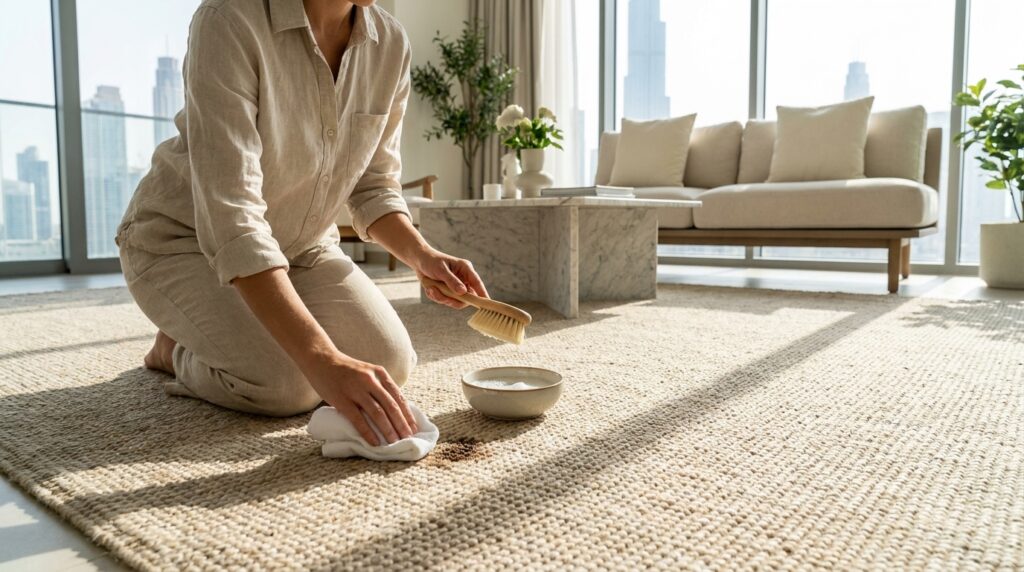
Apply the solution sparingly with a clean cloth or soft brush. Work gently rather than soaking the entire rug.
Step 4: Clean the Surface Carefully
Work in small sections, following the direction of the pile where practical. Remove loosened dirt with a clean, slightly damp cloth. Then, blot away remaining moisture using dry towels.
Avoid aggressive scrubbing because it can spread dirt and damage the fibres. Most importantly, do not leave the rug wet for an extended period.
Step 5: Dry the Rug Completely
Allow the rug to dry thoroughly in a well-ventilated area. A fan can improve airflow and help moisture evaporate. In Dubai’s humid indoor conditions, proper ventilation is especially useful.
Make sure the backing and underside are completely dry before placing the rug back on the floor. This helps prevent musty odours and moisture damage.
DIY Area Rug Stain Removal Methods
Quick action makes stains easier to manage. When something spills, remove solid material carefully and blot the liquid with a clean, white cloth. Always work from the outside of the stain towards the centre to reduce spreading.
Here are some practical methods for common household stains.
Food and Drink Stains
For fresh tea, coffee, juice, or food spills, blot up as much liquid as possible. Use a small amount of a suitable, diluted cleaning solution if the rug’s care instructions allow it. Follow with a clean, slightly damp cloth to remove residue.
Do not rub the stain or pour water directly onto the rug.
Grease and Oil Stains
First, lift excess oil with a paper towel without pressing it deeper into the fibres. For a compatible rug, sprinkle a small amount of baking soda over the spot and leave it briefly to absorb some of the grease. Vacuum the powder thoroughly.
If a greasy mark remains, use a cleaner approved for the rug material. Avoid wet treatments on jute, sisal, and other moisture-sensitive rugs.
Mud and Dirt Stains
Allow wet mud to dry before removing it. Once dry, gently loosen the dirt and vacuum it away. If a mark remains, blot it with a suitable cleaning solution rather than scrubbing the fibres.
Pet Stains and Odours
Blot fresh pet accidents immediately. A suitable enzyme-based cleaner may help with organic stains and odours, but check that it is safe for your rug first.
If urine has penetrated the backing or padding, surface cleaning may not remove the underlying odour. Professional treatment may be necessary.
Homemade Carpet Cleaner Recipe for Area Rugs
A simple homemade carpet cleaner recipe can help with minor spills on compatible, colourfast rugs. However, no single homemade solution is suitable for every fibre or dye.
For a basic spot-cleaning mixture, combine:
2 cups of cool water
A few drops of mild, clear dishwashing liquid
Mix gently and apply a small amount to a clean white cloth. Blot the affected area, then use another cloth lightly dampened with plain water to remove detergent residue. Finish by blotting with a dry towel.
Always test the mixture in a hidden area first. Too much soap can leave a sticky residue that attracts more dirt.
What is the best homemade carpet cleaning solution for machines?
There is no universal homemade solution that is safe for every carpet-cleaning machine or area rug. Use only the cleaning products approved by the machine manufacturer and suitable for your rug. Homemade mixtures can cause excessive foaming, leave residue, or damage equipment.
Never mix cleaning products, particularly bleach with vinegar or ammonia-based cleaners.
How to Clean a Rug Without a Carpet Cleaner
You do not necessarily need specialist equipment to maintain a rug. For suitable materials, regular vacuuming, a clean cloth, mild detergent, and careful drying can handle many everyday cleaning needs.
If you are wondering how to wash carpets without a carpet cleaner, start by checking whether the rug is washable. Small rugs labelled machine washable may be cleaned according to their care instructions. Larger rugs can often be spot-cleaned by hand, provided the material permits moisture.
Avoid soaking large rugs indoors because excess water can reach the backing and flooring. Also, do not use steam or hot water unless the manufacturer specifically permits it.
How to Shampoo Carpet by Hand
For a rug that permits shampoo cleaning, apply a suitable rug shampoo as directed on the label. Work it gently into the surface using a soft brush, avoiding excessive moisture. Remove the product and loosened dirt according to the instructions, then allow the rug to dry completely.
This method is not appropriate for every rug. Delicate, antique, silk, and moisture-sensitive natural-fibre rugs may require specialist treatment.
How to Disinfect Carpet and Area Rugs Safely
Routine cleaning removes dirt, while disinfection targets certain germs. These are different processes. Vacuuming alone does not disinfect a rug, and ordinary soap is not a substitute for an approved disinfectant.
If disinfection is necessary, choose a product specifically labelled as suitable for the rug material and follow its directions, including the required contact time. Test it first and avoid products that may bleach or damage the fibres.
For delicate rugs, persistent pet contamination, or concerns about deep-set odours, consult a professional instead of applying strong chemicals.
When to Hire Professional Area Rug Cleaners in Dubai
Home cleaning is useful for routine maintenance, but some rugs need more specialised care. Consider professional area rug cleaning services when:
The rug has stubborn stains that do not respond to safe spot cleaning.
It has a persistent odour or deeply embedded dirt.
The rug is handmade, antique, silk, or particularly valuable.
Colours bleed during testing or the fibres appear damaged.
The rug is too large to clean and dry properly at home.
Professional rug cleaners can assess the material, construction, stains, and cleaning requirements before recommending a suitable method. This is especially important for oriental rugs, where incorrect products or excessive moisture may damage the dyes, fringes, or backing.
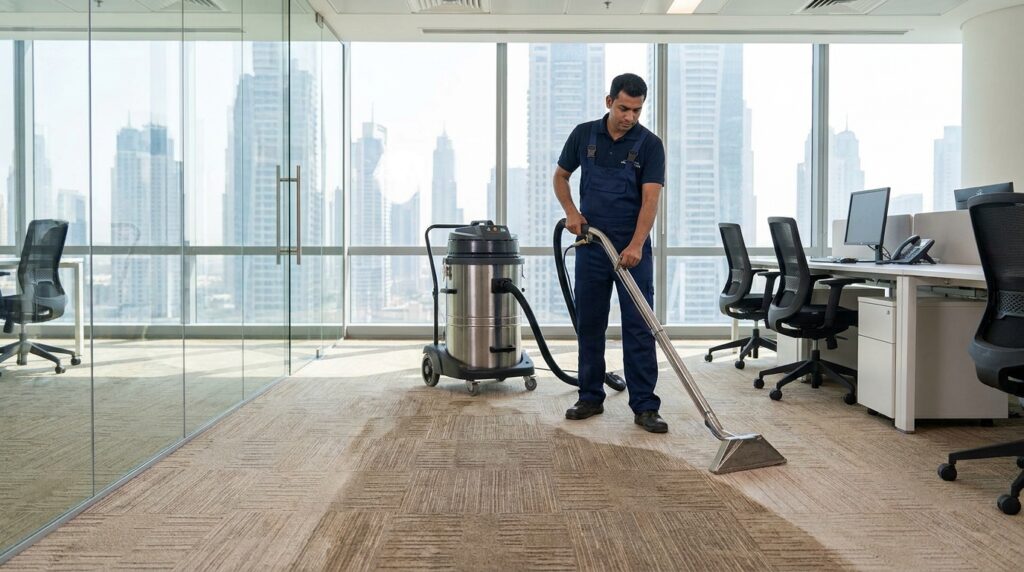
If you are searching online for area rug cleaning services near me, rug cleaning services near me, or rug cleaners near me, compare the provider’s experience with your specific rug type, cleaning methods, and drying process. Ask whether the service includes stain treatment and odour removal.
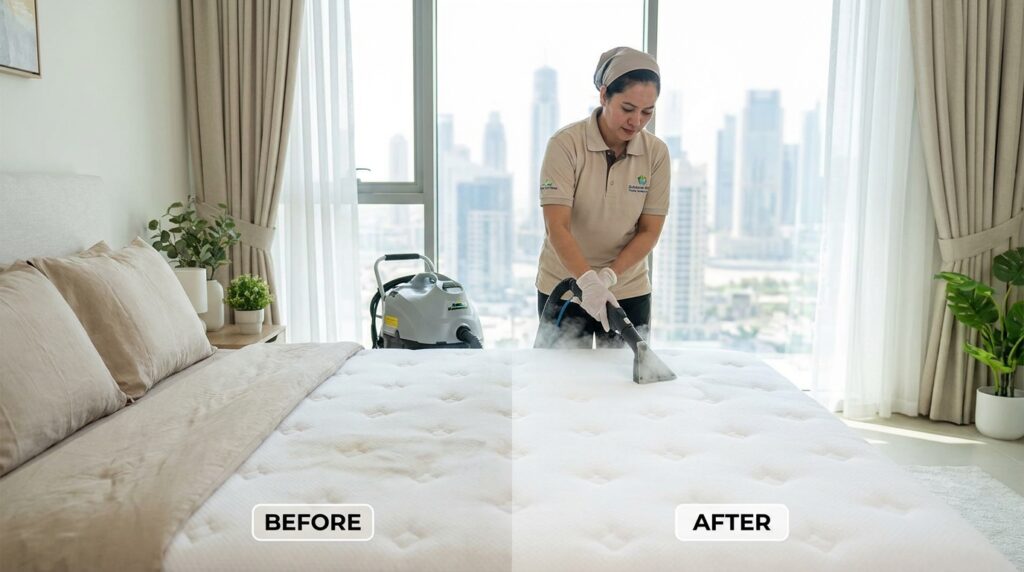
Some providers offer combined carpet cleaning rug cleaning services, which may be convenient when several areas of your home need attention. However, area rugs and fitted carpets do not always require the same cleaning method.
At Dubai Cleaning Services, you can explore the available cleaning options and request a quote to discuss your requirements. Choose a service based on your rug’s material and condition rather than price alone.
Simple Tips to Keep Area Rugs Clean for Longer
A few regular habits can reduce dirt build-up and help preserve your rug.
Vacuum weekly, or more often in busy areas.
Blot spills immediately instead of letting them dry.
Rotate the rug periodically to distribute foot traffic and sunlight exposure.
Use a suitable rug pad to reduce slipping and friction.
Keep rugs dry and ventilate rooms after cleaning.
Arrange deeper cleaning when routine maintenance is no longer enough.
Frequently Asked Questions
How often should I clean an area rug?
Vacuum most area rugs weekly. Spot-clean spills as soon as possible, and arrange deeper cleaning when dirt, odours, or stains build up. The ideal schedule depends on foot traffic, pets, and the rug material.
Can I use vinegar to clean an area rug?
Vinegar is not suitable for every rug. It may affect certain dyes, finishes, or fibres. Use it only if the manufacturer confirms it is appropriate, and always test an inconspicuous area first.
Can I use baking soda on my rug?
Baking soda may help absorb some surface odours or grease on compatible rugs. However, fine powder can become trapped in thick piles. Vacuum it thoroughly, and avoid moisture-sensitive materials if the care instructions advise against such treatments.
Should I hire professional rug cleaners for an oriental rug?
Professional cleaning is a sensible option for valuable, antique, or delicate oriental rugs. A specialist can assess the fibres, dyes, and construction before selecting an appropriate cleaning process.
Final Thoughts
Knowing how to clean an area rug helps you manage everyday dirt, treat minor stains, and maintain a fresher home. The most important steps are to identify the rug material, test cleaning products, use minimal moisture, and allow complete drying.
For delicate rugs, stubborn stains, or deep-set odours, professional cleaning can help reduce the risk of damage. Choose the method that suits your rug’s needs so it stays attractive and comfortable for longer.